CRO is getting more sales out of the traffic you already have. Instead of spending more to attract visits, you optimise the site so a larger share of those who arrive end up buying or leaving their details. Done well, it is one of the highest-return investments in digital marketing: every conversion point you gain is multiplied across all your traffic. Here is what it is and how to apply it with method, no fluff.
Want us to do it for you? See our SEO service
If you would rather have a team run it, we work on it as your CRO agency. If you want to understand the terrain and execute it yourself, read on.
What CRO (Conversion Rate Optimization) is
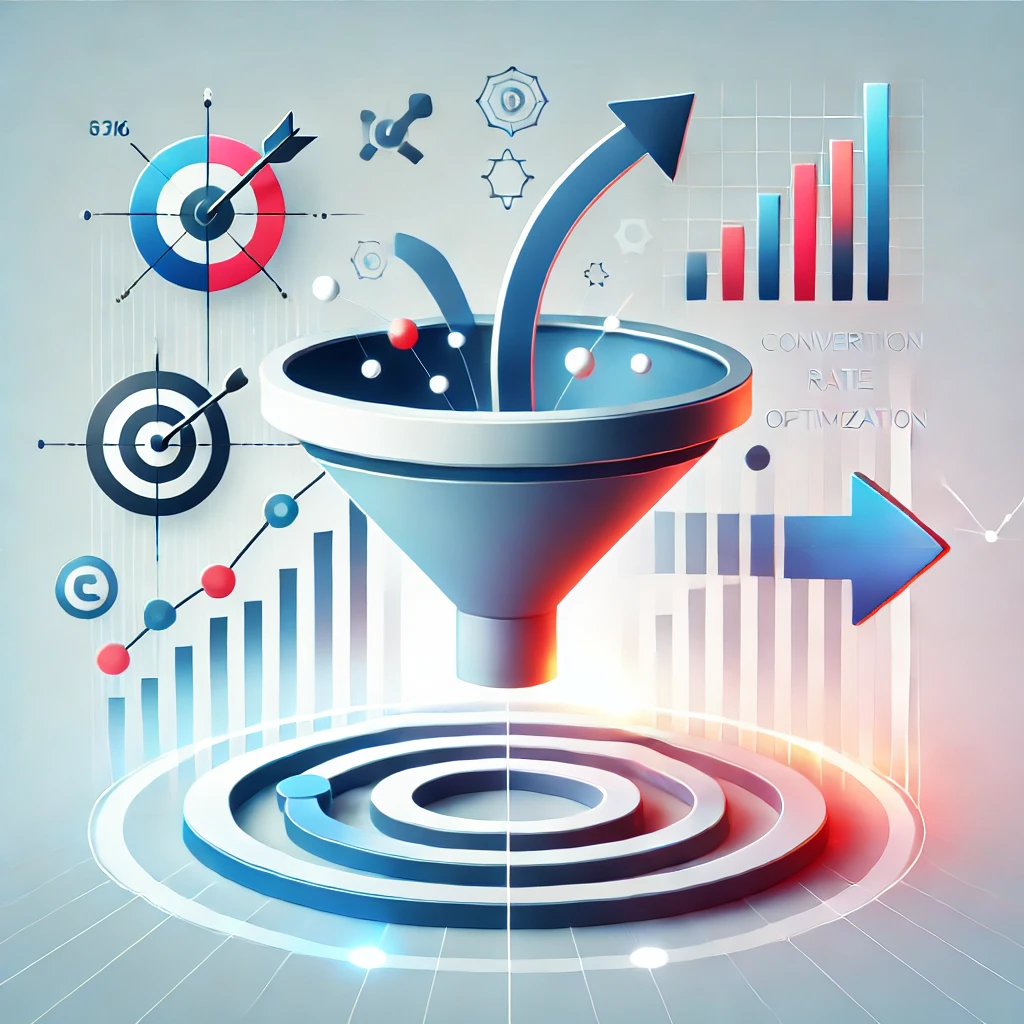
CRO is conversion rate optimisation: the percentage of visitors who complete the action you want (buy, sign up, request a quote). Optimising conversion means raising that percentage by working the experience, the message and the friction of the site, not the volume of traffic. That is why it is so profitable: you improve what you already paid to bring in.
Why CRO is the most profitable lever
Raising conversion from 2% to 3% is 50% more sales with the same traffic and the same acquisition spend. While SEO and SEM work to bring more people, CRO works to make those people convert. Attacking only acquisition and forgetting conversion is filling a leaking bucket.
The CRO method: data, not opinions
CRO that works is scientific, not a matter of taste. The cycle:
- Measure and detect: with analytics and heatmaps, find where people drop off (the page, the funnel step, the form).
- Form a hypothesis: why they drop off and what change might improve it.
- Test: pit the change against the current version with real data, not by eye.
- Iterate: apply what wins, discard what does not, and start again. CRO is continuous.
A/B testing: let the data decide
The A/B test compares two versions of an element (headline, button, form, image) to see which converts more, with real traffic and statistical significance. It is the central tool of CRO because it removes opinion from the equation. How to set them up well, in what A/B tests are and how to use them.
What to optimise first
Not everything weighs the same. The biggest gains tend to be in:
- Forms: every extra field is people abandoning. How to refine them, in advanced CRO for forms.
- Conversion pages: clarity of the offer, social proof and a call to action that leaves no doubt. If it is a campaign, the design and copy of the landing pages are half the work.
- The full funnel: find the step where most people drop off and fix that first. How to analyse it, in analyse your sales funnel.
CRO for SMEs and mid-sized companies
You do not need a giant's traffic for CRO to pay off. With mid-sized volume, optimising conversion is one of the first things that shows in the bottom line. How to approach it, in CRO for mid-sized companies.
Metrics: measure conversion and business
CRO is tuned with data. What matters:
- Conversion rate: by page, by traffic source and by device (mobile is usually where most is lost).
- Drop-off rate: where and when people leave.
- Value per visit: how much each visitor is worth on average, a better compass than conversion alone.
- Test significance: do not call a result good without enough data; a short test misleads.
CRO, acquisition and landing pages: the full circle
CRO does not go alone. Traffic from SEO and SEM feeds the tests (more visits, sooner you have data), and the landing pages are where CRO performs most. Acquiring and converting are the two halves of the same job.
Conclusion
CRO that performs is method: measure, form hypotheses, test with A/B and iterate, starting where most people drop off. It is the most profitable way to grow without spending more on traffic. If you want us to build it and measure it for you, as your CRO agency we analyse your case and put your conversion to work. Let's talk.